How to Prioritize When Everything Feels Important
Some seasons of life feel like one long list of “must-dos.” Work needs you, home needs you, people need you, and your own goals are still waiting in the background. When everything feels important, it’s easy to freeze—or stay busy all day and still feel behind. This post will help you prioritize in a way that feels clear, realistic, and calm.
Why everything feels important (even when it can’t all be first)
When you’re overwhelmed, your brain treats everything like an emergency. It’s trying to protect you, but it makes decision-making harder. You end up jumping between tasks, reacting to the loudest thing, and losing track of what actually matters.
Here’s the truth that helps: prioritizing is not picking what matters. It’s picking what matters most right now.
Start with a quick reality check
When everything feels urgent, you need a moment of truth. Ask yourself these three questions:
- What has a real deadline? Not a “pressure deadline,” a real one.
- What has real consequences? What happens if this isn’t done soon?
- What’s actually mine to handle? What am I taking on that isn’t my job?
This clears out the fog and helps you see what’s truly urgent versus what’s simply loud.
The “two lists” method: urgent vs. important
Grab paper or open a note. Make two lists:
- Urgent: must be done soon because of time or consequences
- Important: matters, but doesn’t need immediate action today
Most people mix these together and feel crushed. Separating them gives your brain relief.
Examples:
- Urgent: pay a bill, finish a work task due tomorrow, pick up medication
- Important: exercise, organize finances, start a long-term project, declutter
Important things deserve time, but urgent things usually need action first. The mistake is treating every important thing like it’s urgent today.
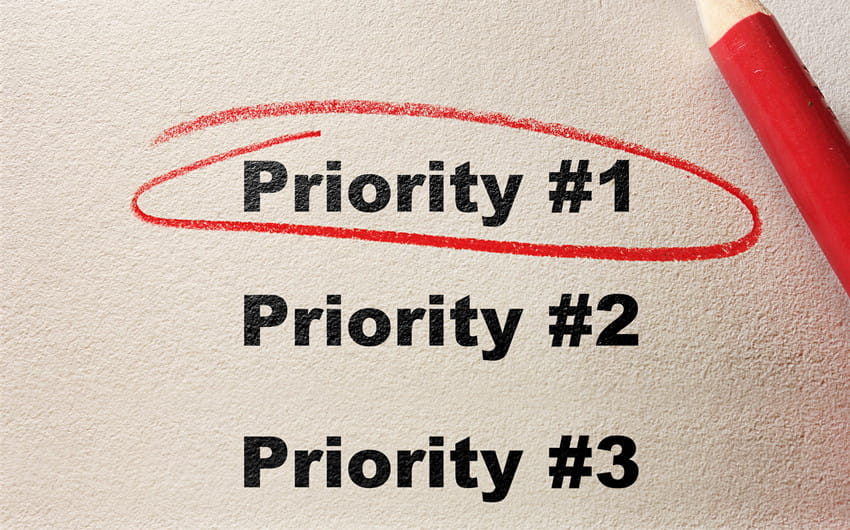
Choose your “Top 1” and “Top 3”
If your to-do list is big, choose two levels of priority:
- Top 1: the one thing that will make today feel successful
- Top 3: the three things that matter most today (including your Top 1)
Your Top 1 should be something you can finish, not a vague goal. If it’s too big, shrink it.
Examples of a strong Top 1:
- “Send the email and attach the file”
- “Pay the electric bill”
- “Write the intro + outline for the post”
- “Do the grocery order”
When you have a Top 1, the day becomes simpler. You stop guessing what to do next.
Use the “impact vs. effort” test
If you’re stuck between tasks, ask:
“What takes the least effort for the biggest relief or progress?”
Choose tasks that create momentum. These usually fall into two categories:
- Quick relief tasks: a small action that removes pressure (pay, call, confirm, submit)
- Progress tasks: a small step that moves a bigger goal forward (outline, draft, prep)
Prioritizing gets easier when you stop choosing based on guilt and start choosing based on impact.
The “next right step” strategy (for overwhelm)
When your mind is spinning, don’t plan your whole day. Choose the next right step for the next hour.
Ask:
“What is the next right step that makes everything else a little easier?”
This works because overwhelm shrinks when you create forward motion. You don’t need the full map. You need the next move.
Protect your time with a simple rule: one big task per day
If you try to do five big tasks in one day, you’ll feel like you failed. Most days can realistically handle:
- One big task
- Two to three small tasks
- Basic life maintenance (meals, cleaning, people, rest)
That’s not a weakness. That’s reality.
Pick one big task for the day. If you get more done, great. But don’t build your plan on the fantasy version of your day.
Stop letting messages set your priorities
When everything feels important, it’s easy to let other people decide your day. A message pops up, and suddenly that becomes priority one.
Try this instead:
- Check messages at set times (not constantly)
- Turn off non-essential notifications
- Do your Top 1 before scrolling or replying to everything
You can still be responsive without being controlled.
What to do with tasks you can’t handle right now
Not everything needs to be done today, and not everything needs to be done by you.
When you look at your list, label tasks like this:
- Do: you must do it
- Delay: not today, schedule it later
- Delegate: ask for help or hand it off
- Delete: remove it completely
This one step can cut your mental load in half. You’re not ignoring tasks—you’re deciding what happens to them.
A simple prioritizing plan you can use today
If you want a quick process that works even when you’re stressed, use this:
- Write everything down (brain dump).
- Circle what has real deadlines or real consequences.
- Choose your Top 1 task (small and finishable).
- Choose two more tasks for your Top 3.
- Schedule one short block for your Top 1 (even 20 minutes counts).
- Move the rest to “Later” so it stops screaming at you.
Prioritizing is a kindness to your future self
When everything feels important, it’s tempting to treat yourself like a machine. But you’re not built for endless urgency. You’re built for steady progress.
Prioritizing is not about doing more. It’s about doing what matters in the right order, with less stress. Pick your Top 1. Protect it. Then keep going one small step at a time.