Simple Strategy: Build a Weekly Plan You’ll Actually Follow
A weekly plan sounds simple, but most people quit theirs after a week or two. It’s not because they’re lazy. It’s usually because the plan is too complicated, too strict, or built for an “ideal” life that doesn’t exist. This post will help you build a weekly plan you can actually follow—one that fits your real energy, real schedule, and real priorities.
Why most weekly plans fail
Before we build a better one, it helps to know what makes weekly plans fall apart. Most plans fail for one of these reasons:
- They’re too packed. You plan every minute, then life happens.
- They ignore your energy. You schedule hard tasks on low-energy days.
- They’re based on motivation. Motivation changes daily, so the plan breaks fast.
- They don’t include “life stuff.” Errands, meals, rest, and time to reset are missing.
- They’re not simple. Too many apps, colors, lists, and rules.
The goal is not a perfect plan. The goal is a plan that still works when the week gets messy.
What “a weekly plan you’ll follow” actually means
A weekly plan should do three things:
- Make your priorities obvious. You should know what matters most this week.
- Reduce daily decisions. Less “What should I do now?” and more “I already decided.”
- Leave room for real life. A good plan has breathing space.
If your plan makes you feel trapped or behind all the time, it’s not a plan—it’s pressure.
The simple weekly planning method
This method works because it’s small, clear, and flexible. You can do it in 20–30 minutes once a week.
Step 1: Pick your weekly “main focus”
Your main focus is the one theme you want your week to support. It’s not a to-do list. It’s a direction.
Examples:
- Finish a project without rushing
- Get back into a steady routine
- Protect sleep and reduce stress
- Deep clean and reset the home
- Make progress on a personal goal
Choose one. When everything is a focus, nothing is.
Step 2: Choose your “Big 3” priorities
Now pick three priorities for the whole week. These are the outcomes you want by the end of the week.
Good weekly priorities are specific and finishable. Here are examples:
- Submit the application
- Write 1,500 words for a blog post
- Book the appointment
- Organize the closet and donate one bag
- Walk three times
If you pick ten priorities, you’ll feel behind by Tuesday. Keep it to three.
Step 3: Make a short “must-do” list (max 10 items)
This list holds the tasks that truly need to happen this week. Not “nice to do.” Not “maybe.” Only what matters.
Here’s the rule: if you can’t finish it this week, break it into a smaller piece. For example:
- Instead of “Start a business,” write “Outline the first offer.”
- Instead of “Get healthy,” write “Plan 3 easy lunches.”
- Instead of “Clean the house,” write “Kitchen reset + one load of laundry.”
This step keeps your plan realistic and doable.
Step 4: Set your “minimum plan”
This is the secret to staying consistent. Your minimum plan is what you do even when the week is hard.
Pick 3–5 basics that make you feel steady. For example:
- 10-minute tidy each day
- 30 minutes of focused work, 3 times
- Two simple meals planned
- One walk or stretch session
- Inbox reset once
If you do your minimum plan, the week is a win. This prevents the “all-or-nothing” spiral.
Step 5: Create “time blocks,” not a minute-by-minute schedule
Instead of scheduling every task at an exact time, plan your week using blocks. Blocks are flexible. They’re easier to follow.
Here are a few simple blocks you can use:
- Deep work block: focused work on your Big 3
- Admin block: emails, calls, errands, planning
- Home block: cleaning, laundry, meal prep
- Reset block: rest, hobby time, recharging
Now assign blocks to days based on your real life. If Mondays are busy, don’t schedule your hardest work then. Match your plan to your energy.
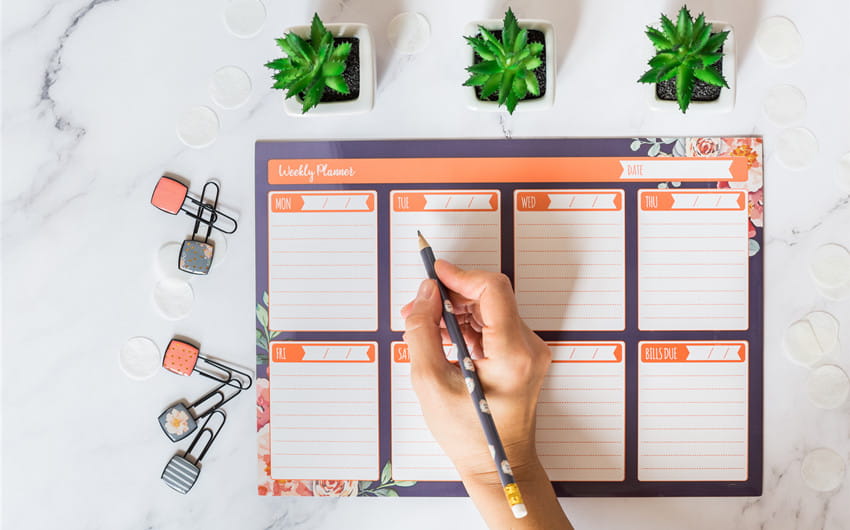
A weekly plan template you can copy
Here’s a simple layout you can reuse every week. Keep it in a notes app, a notebook, or a printed page.
- Main Focus: _______________________
- Big 3 Priorities:
- 1) _______________________
- 2) _______________________
- 3) _______________________
- Must-Do List (max 10):
- _______________________
- _______________________
- _______________________
- _______________________
- _______________________
- Minimum Plan (3–5 basics):
- _______________________
- _______________________
- _______________________
How to assign tasks to days without overloading yourself
Here’s a clean way to do it:
- Pick 2–3 “high effort” days for your biggest work.
- Pick 2–3 “low effort” days for admin, errands, and lighter tasks.
- Pick 1 reset day where you plan less and restore more.
You can still do important work on busy days, but don’t pretend every day has the same space. This one shift makes your plan feel believable.
The “two lists” trick that makes planning easier
Try keeping two running lists:
- This Week: your must-do list (short)
- Later: everything else (long)
Most stress comes from mixing these two. When “later” tasks sit in your face all week, your brain treats them like emergencies. Moving them out of view reduces mental noise.
Build in a weekly reset (15 minutes)
Even the best plan needs a quick check-in. Set a 15-minute weekly reset—midweek or near the end of the week.
Use this mini reset to:
- Move unfinished tasks to a new day
- Cancel what doesn’t matter anymore
- Confirm your next “one most important thing”
- Make the rest of the week lighter
This keeps your plan alive instead of broken.
What to do when you fall behind
Falling behind doesn’t mean your plan failed. It usually means your week got real. Here’s what to do instead of quitting:
- Return to your minimum plan. Basics first.
- Choose one priority for the next 24 hours. Not ten.
- Cut tasks in half. Do the “smallest useful version.”
- Move the rest to next week. No guilt, just a decision.
A plan is not a punishment. It’s a tool. If it’s not helping, adjust it.
A simple example weekly plan
If you want to see what this looks like in real life, here’s an example.
- Main Focus: Get back into a steady routine
- Big 3 Priorities:
- 1) Finish draft of one blog post
- 2) Clean and reset kitchen
- 3) Walk three times
- Minimum Plan:
- 10-minute tidy daily
- 30 minutes writing twice
- One walk
Notice how it’s simple. It has breathing room. And it still counts as a win even if the week gets messy.
Make your weekly plan sustainable
Here are a few final rules that keep weekly planning easy:
- Plan for 70% of your time. Leave space for surprises.
- Stop overpromising to your future self. Be kind and realistic.
- Use fewer tools. One calendar + one list is enough.
- Focus on progress, not perfection. A simple plan followed beats a perfect plan ignored.
Your weekly plan should feel like support, not stress. Start small, keep it simple, and build trust with yourself week by week.
If you want, you can use this post as your weekly checklist. Copy the template, try it for two weeks, and adjust it until it fits your life. That’s the whole point of Estragy—simple strategy that actually works.