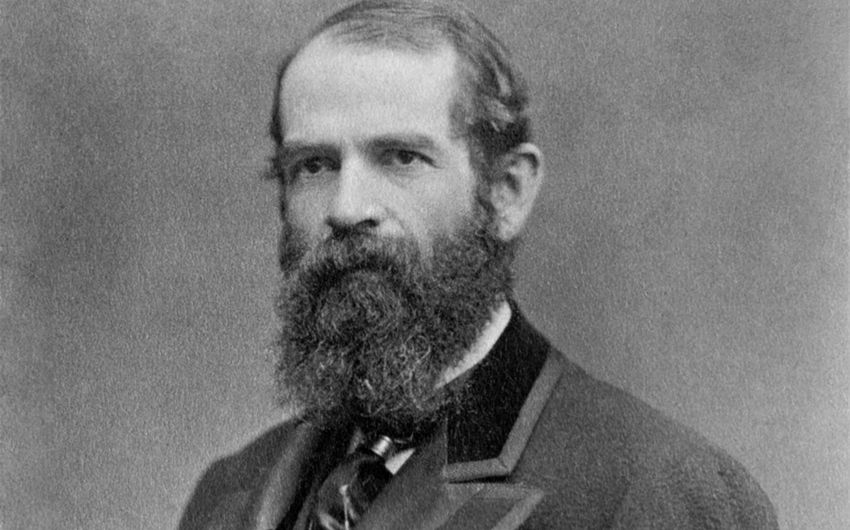
Jay Gould Net Worth: Estimated Fortune and How the Gilded Age Financier Built It
Jay Gould’s net worth is one of those Gilded Age figures that sounds almost unreal until you place it in context. At the time of his death in 1892, his fortune was estimated at roughly $72 million to $77 million—money built through railroads, communications, and relentless Wall Street control battles. Adjusted for today’s purchasing power, that works out to about $2.6 billion to $2.8 billion, depending on which historical estimate you use.
Who Was Jay Gould?
Jay Gould (1836–1892) was one of the most infamous financiers of America’s Gilded Age. He’s often grouped with the era’s “robber barons” because he used aggressive, sometimes ethically questionable tactics to gain control of companies and reshape markets in his favor. Gould’s name is most closely tied to railroads, Wall Street battles for corporate control, and later ownership of communications infrastructure. Even during his lifetime, he was widely criticized as ruthless, yet he also became one of the richest men in the United States before dying in 1892.
Estimated Net Worth
Estimated net worth at death (1892): about $72 million to $77 million.
Historical sources commonly cite Gould at roughly $72 million at death, while other reputable references place him closer to $77 million. Because 19th-century fortunes weren’t tracked with the same public disclosure standards as today, it’s best to treat these figures as credible estimates rather than precise audited totals.
Estimated in today’s dollars (2026 purchasing power): roughly $2.6 billion to $2.8 billion.
This modern equivalent is based on a CPI-style purchasing power conversion, which estimates what Gould’s 1892 fortune would represent in today’s money in terms of buying power. Using that approach, $72 million becomes roughly $2.6 billion, and $77 million becomes roughly $2.8 billion.
One important note: historical wealth can also be compared using a “share of the economy” method rather than inflation. When you measure Gould’s fortune relative to the size of the U.S. economy in the 1890s, the modern equivalent can look dramatically larger. That’s why he often appears near the top of lists of America’s richest people in history, even if the inflation-adjusted number sounds “only” in the low billions.
Net Worth Breakdown: Where Jay Gould’s Money Came From
1) Railroads as the primary wealth engine
Railroads were the backbone of Gould’s fortune. In the late 1800s, rail lines weren’t just a transportation business. They were economic infrastructure. Control a railroad and you controlled freight pricing, access to markets, and regional development. Gould became known for building influence through railroad stakes, gaining control in corporate battles, and reshaping rail systems to increase his power.
Financially, the railroad business gave him two types of upside. First, there was operating profit from the business itself. Second—and often more important—was equity appreciation. When Gould consolidated routes, negotiated favorable terms, or pushed strategic restructuring, the value of the stocks and assets he controlled could rise sharply. That kind of asset-value growth is one reason fortunes in the Gilded Age could expand quickly.
2) Western Union and communications infrastructure
Gould’s wealth wasn’t limited to transportation. He also moved into communications, most notably through Western Union. In the 19th century, telegraph networks functioned like essential infrastructure, similar to how data networks and telecom do today. Controlling a major telegraph company gave Gould a toll-road-style business, collecting revenue from a service that businesses and the public relied on.
Communications assets also offered strategic power. Information moved markets. Being connected to the infrastructure that carried information could strengthen a financier’s influence far beyond the profits of the company itself.
3) Wall Street tactics and corporate control battles
Gould was notorious for market maneuvers. He used stock accumulation, leverage, alliances, and strategic timing to outplay rivals in control battles. Winning those battles could be enormously profitable, because the prize wasn’t only an operating business. It could also be a settlement, a forced buyout, or a surge in stock value once the market realized who held the reins.
This category is part of why he became so controversial. Many contemporaries felt his tactics were destabilizing and harmful to ordinary investors. But from a net worth standpoint, the tactics helped him multiply wealth more rapidly than someone earning only through steady business operations.
4) Newspaper ownership and influence value
Gould also owned a major newspaper for a period, and that kind of asset carried influence. In an era before modern broadcast media, newspapers were central to public opinion and investor sentiment. Owning a major publication wasn’t only about selling papers. It could shape narratives, affect reputations, and indirectly influence markets connected to Gould’s other holdings.
Even if newspaper ownership wasn’t the largest profit center in his portfolio, it could function as a strategic asset that supported his larger financial goals.
5) Urban transit monopoly-style positioning
Gould’s interests also extended into urban transit, including control of elevated railway systems in New York City. Assets like this were valuable because they operated as near-monopoly infrastructure in dense cities. Demand for transit is persistent, tied to population growth and daily movement, which can generate stable cash flow and long-term asset value.
Infrastructure-like businesses often become wealth anchors because they keep producing revenue even when other industries cycle up and down.
6) Why Gould’s modern “equivalent” wealth is always debated
When people ask “What would Jay Gould be worth today?” the answer depends on the comparison method. Inflation-based purchasing power conversions produce a low-billion-dollar equivalent. But if you compare his wealth to the size of the U.S. economy at the time, the modern equivalent can jump dramatically.
Both views can be useful. Purchasing power tells you what his money could buy. Share-of-economy tells you how powerful his fortune was relative to his era. Gould’s name stays prominent because by either method, he was not just rich—he was structurally powerful.
Featured Image Source: https://en.wikipedia.org/wiki/Jay_Gould